REVIEW DRAFT · FINANCIAL RESET
Educational disclosure: This article provides general education and research, not individualized financial, legal, tax, credit, or investment advice. It includes no affiliate links or product recommendations.
Living paycheck to paycheck does not have one official definition. For many people, it means the money expected before the next payday is already committed to bills, groceries, transportation, debt payments, or past-due costs. A surprise expense, an early bill, or a delayed deposit can then create a crisis because there is little room to absorb it.
It is a cash-flow condition, not a character flaw
Paycheck-to-paycheck pressure can exist at many income levels and for many reasons: unstable hours, high housing or child-care costs, debt payments, medical expenses, supporting family, a recent job change, or a sequence of emergencies. Blaming yourself can make you avoid the numbers. The more useful question is: what happens between this payday and the next one?
Look for the patterns, not one perfect label
You may be under strain if a routine bill regularly leaves the account close to zero, a small emergency goes on a credit card because there is no cash option, you depend on timing deposits precisely, or automatic withdrawals create overdraft risk. None of these alone tells the entire story. Together they point to a need for a clearer short-term system.
| Pattern | What to check | First useful response |
|---|---|---|
| Balance drops before payday | Dates of deposits and essential bills | Build a running-balance calendar |
| Late fees repeat | Due dates, grace periods, autopay timing | Ask about a date change or arrangement |
| Unexpected cost goes to debt | What the cost was and when it repeats | Create a small known-expense line |
| Income is variable | Lowest reliable pay amount | Plan from a conservative baseline |
Start with a 30-minute reality check
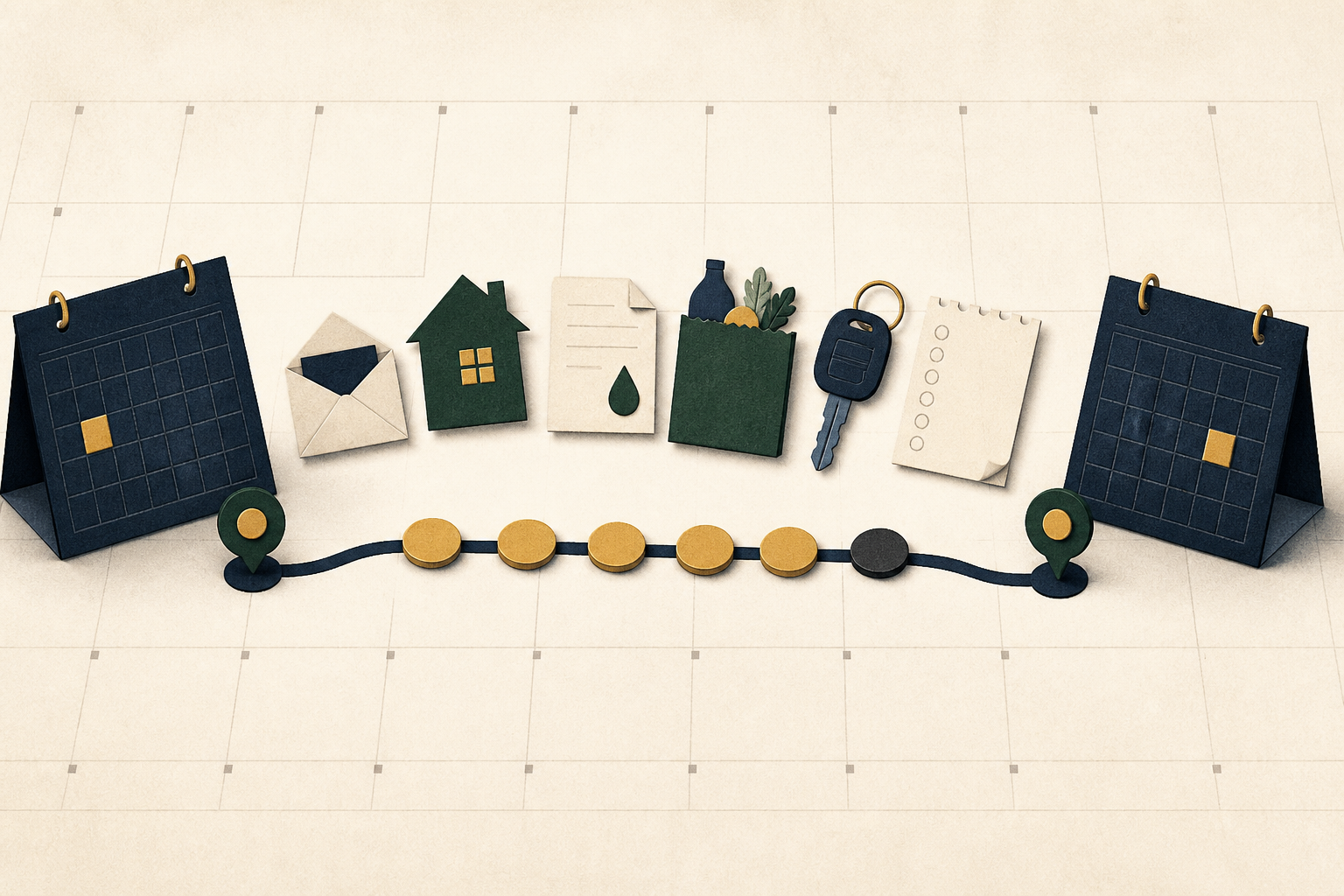
Gather your current checking balance, the next pay dates, and every bill or spending need before then. Put them in date order and calculate a running balance. This is not a full financial plan. It is a way to identify the first risk date. Use How to See Your Real Cash Flow in 30 Minutes for the worksheet.
Build a small stability plan
After you can see the dates, make a bare-bones version of the next pay period. List housing, basic utilities, food, medication, necessary transportation, insurance, care obligations, and minimum required payments. Then put flexible spending in a separate list. The purpose is to make choices visible, not to shame yourself for needing rest, convenience, or enjoyment.
When bills will not all fit
Use the actual terms and consequences, not the biller who contacts you most often. If you are facing a shutoff, eviction notice, foreclosure, repossession, collection lawsuit, or court deadline, read the notice and seek qualified local help promptly. Contact billers before the due date when possible, ask about hardship programs or an affordable arrangement, and get the terms in writing. Do not agree to a payment you cannot keep just to end the call.
What progress can look like
Early progress may look modest: fewer surprises, a bill moved to a date that works, a week of groceries planned before the account is empty, or a small buffer that prevents an overdraft. These are operational wins. They do not erase a structural shortfall, but they can create enough breathing room to make the next decision more deliberate.
Separate a timing problem from a long-term gap
Some households have enough total income for the month but still run out before a deposit arrives. That is a timing problem, and a calendar, due-date change, or small buffer may help. Other households have reliable income that does not cover essential costs. That is a long-term gap. A calendar still makes it visible, but it should not be used to hide the need for larger changes, support, or qualified guidance.
Write down which pattern you see for three or four pay cycles before drawing a conclusion. A single difficult month may reflect a one-time cost. A repeated gap is evidence that the baseline plan needs attention. This approach replaces vague anxiety with a record you can use when discussing options with a biller, counselor, household member, or professional.
Related reading: Build a Bare-Bones Budget, Which Bills to Protect First, and A Financial Reset Checklist.
Sources and review notes
- Consumer Financial Protection Bureau, budgeting resources
- FDIC consumer guidance on saving for the unexpected
Human review required before publication: Add only owner-approved personal context and confirm that all cited links remain current.