
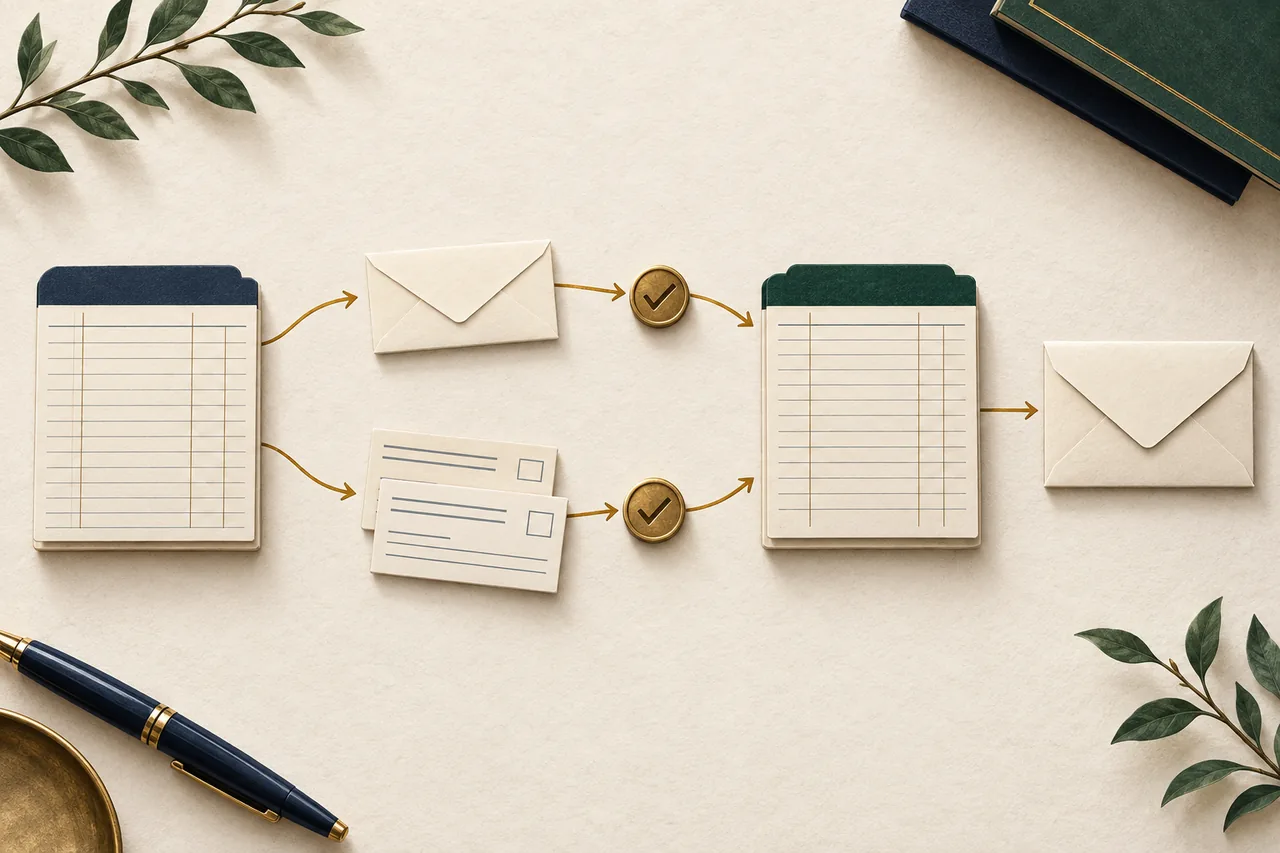
Switching checking accounts is safest as a staged transfer, not a single balance move. Open and test the new account first, then track income and payments separately until each one works through its new route. Keep enough in the old account for checks and debits that have not cleared, and close it only after the transition and final transfer are confirmed.
Why should you open the new account before closing the old one?
The old account is still the fallback while employers, benefit payers, billers, and payment instructions catch up. The Consumer Financial Protection Bureau (CFPB) recommends opening the new account first, listing recurring deposits and withdrawals, and leaving enough money in the old account for uncleared checks or payments. Its guidance is for U.S. checking accounts; your banks and billers set their own change and processing steps.
Do not treat “I submitted the form” as “the new route works.” A payroll change can take effect on a later pay cycle, and a payment may still be scheduled from the old account. Running both accounts for a transition period gives you somewhere to look when one item has not moved yet.
What should go in a bank-switch tracker?
Make one row for every deposit, payment, transfer, or check connected to the old account. Include the source, expected date, amount or range, how it is initiated, change requested date, first confirmed activity at the new account, and whether the old instruction has been stopped. Mark a row complete only after you see the transaction succeed through the new route.
- Deposits: payroll, benefits, reimbursements, recurring transfers from another person or account, and any other regular incoming funds.
- Company withdrawals: utilities, loans, insurance, subscriptions, credit cards, and other bills where the company pulls money from your account.
- Bank-sent payments: recurring bill-pay instructions that you set up inside the old bank’s website or app.
- One-off items: paper checks not yet cashed, scheduled transfers, annual or quarterly bills, and pending card or account transactions.
Review recent statements and the old account’s scheduled-payment screen, then compare them with the bills you expect next. A monthly list alone can miss a quarterly insurance premium or an occasional check. The biweekly bill-calendar guide can help place upcoming dates beside paydays; the safe-to-spend calculation explains how to account for money already committed.
Which payments do you change at the company, and which at the bank?
First identify who initiates each payment. A company-authorized automatic debit lets the company pull money from your account. Recurring bank bill-pay gives your bank permission to send money to the company. The CFPB treats these as different arrangements, so changing one does not necessarily update the other.
- For a company debit, use the company’s verified account or contact channel to change the bank details. Check the next due date and ask when the new details will apply.
- For a payment scheduled in the old bank’s bill-pay, create the matching instruction at the new bank for the right payee and date. Check whether the old bank has already sent or scheduled the next payment before canceling it.
- For a card-on-file payment, update the payment method with the merchant. A new bank account number does not automatically replace an old debit-card number.
Keep a record of the change confirmation and the first successful payment. For an amount that varies, note when the company says it will debit and check the actual amount against the bill. The CFPB says companies must provide advance notice when certain recurring debits differ from the authorized amount or range; review the authorization terms because the exact arrangement matters.
Direct-deposit timing: confirm both payer and bank
After the new account is open and you can access it, submit the new details through the employer or payer’s official process. Ask when the change will take effect and which payday is expected to be the first deposit to the new account. Leave the old account open through that date and verify where the deposit actually lands before treating the change as complete.
Do not confuse the receiving bank’s funds-availability rule with the payer’s switch timing. The CFPB says an electronic deposit generally must be available by the next business day after the bank receives it, while some institutions make it available earlier. That rule does not tell you when payroll will update its file or when a particular deposit will arrive. Ask the payer and the receiving bank about their own timing.
A reserve for items that have not cleared
Reserve enough for known items that have not cleared, plus any minimum balance or closure requirement in the account terms. There is no single safe dollar amount for every switch. Check pending transactions, outstanding checks, scheduled bill-pay, and debits whose date is near. Recheck the balance before moving money because a new item can appear after your first review.
Hypothetical example: An old account has a $42 check not yet cashed, an $86 utility debit scheduled, and a $35 bill-pay payment still pending. Known commitments total $42 + $86 + $35 = $163. If the account terms also require $25 to remain until closure, the working reserve would be $163 + $25 = $188. These invented figures are a worksheet example, not a universal cushion; unknown transactions or changed amounts require another check.
What must be confirmed before you close the old account?
Close only after the new account has received the expected deposits, the bills and transfers you moved have appeared through their new routes, and outstanding checks or other pending items have cleared. Then transfer the remaining balance, wait for that transfer to clear at the new bank, and request written confirmation of closure. The CFPB warns that pending checks, fees, and automatic payments can bounce if an account is closed too early.
Before asking for closure, check the old bank’s terms for a minimum balance, early-closure fee, overdraft, or other amount that must be settled. The CFPB notes that an overdrawn account may need to be brought current and some institutions may charge a fee for closing shortly after opening. Rules and fees vary by institution and, for account closure timing, applicable state law.
What if a paycheck or payment still reaches the old account?
Keep the old account available while you identify what happened. Confirm with the payer or biller which account details they have, the date their change takes effect, and whether another payment is already queued. Update the tracker and watch both accounts until the next expected transaction confirms the correction. If a payment is late or returned, contact the biller promptly and ask about its payment options; do not assume the bank transfer fixed the bill.
