
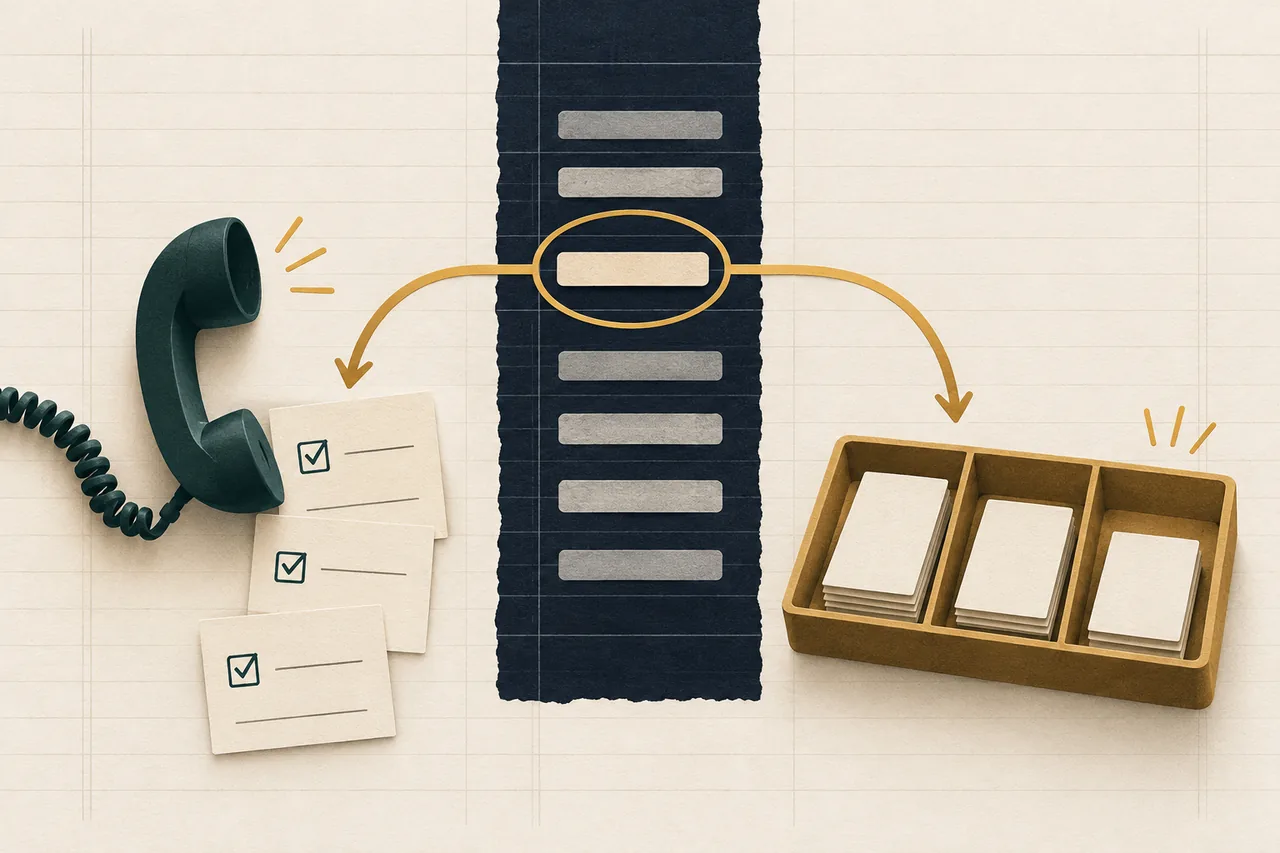
If you do not recognize a bank withdrawal, contact your bank or credit union promptly through a contact you already trust. Describe what you see and what you did or did not authorize, keep a dated record of the report, and complete any requested follow-up. Plan upcoming bills using confirmed funds rather than an expected refund.
This guide is general education for U.S. readers with personal checking or savings accounts. It provides a reporting worksheet, not a decision about your legal rights or a promise that a disputed payment will be returned.
What should you check before calling the bank?
Check the transaction description, amount, date and status, then compare it with your receipts and payment instructions. A name you do not recognize is a reason to investigate; it does not establish who authorized the payment. Do not let that quick check become a delay when you suspect unauthorized use.
Open the bank app or website yourself. Write down whether the entry is pending or posted, how the bank labels the payment, and whether you still have your card. If you cannot identify the payment type, say so. Ask the bank whether it is a debit-card purchase, ATM withdrawal, automatic account debit or another transfer.
The coverage rules for electronic transfers distinguish these transactions from ordinary paper checks and specified wire transfers. A check converted into an electronic transfer can be treated differently from a check processed through the check-collection system. Ask which process applies instead of applying one timeline to everything leaving the account.
Be precise about your own actions. Did someone else initiate the payment? Did you send it yourself after being deceived? Did you previously give another person access? The CFPB electronic-transfer FAQs explain that transfers initiated by a fraudster using credentials obtained through deception can be unauthorized. Those facts differ from a transfer you personally initiated. Report the actual sequence without guessing the legal label.
How quickly should you report an unfamiliar withdrawal?
Report suspected unauthorized activity right away. Two dates particularly matter: when you learned an access device was lost or stolen, and when the bank sent the statement first showing the transaction. These are different starting points.
Under Regulation E section 1005.6, reporting within two business days after learning of a lost or stolen access device can limit liability to the lesser of $50 or the unauthorized transfers before notice. Later reporting can expose you to greater loss. Unauthorized transfers appearing on a statement also have a 60-calendar-day reporting rule measured from the statement being sent, with potential liability for later transfers if reporting is delayed. Conditions and exceptions matter; these numbers are not permission to wait.
Keep both dates in your note even when you think one does not apply. If you discovered the entry today but received the statement earlier, record both. If hospitalization or another serious circumstance prevented reporting, explain it; the rule provides for reasonable extensions for extenuating circumstances.
Contact the bank using its known app, statement or official website. A merchant inquiry can be useful, but do not treat it as your bank report. Likewise, a card-lock action is not the same record as a transaction dispute. Ask the bank to confirm both the protective action and the report it received.
What should you say when reporting the transaction?
Give the bank enough information to identify the account and transaction, explain why you think something is wrong, and ask what happens next. Separate what you know from what you are still checking. A short factual report is more useful than a confident accusation built on an unfamiliar description.
Adapt this wording to the facts: “I am reporting a transaction I do not recognize on my personal account. It shows as [description] for [amount] on [date], with status [pending or posted]. I discovered it on [date and time]. I [did not initiate or authorize it / am unsure what this entry represents / sent a payment after being deceived]. My card [is with me / was lost or stolen]. Please tell me how you are recording this report and what I need to do next.”
Do not use every alternative in the script. Choose the truthful statement and explain uncertainty. If two entries appear, identify both separately rather than adding them into one unexplained total. If a message or receipt clarifies the issue later, send that information through the bank’s designated channel and preserve the earlier record.
Ask for the case reference, the date the bank received your notice, the correct follow-up destination, and any written-confirmation requirement. Section 1005.11 addresses notice contents and permits a bank to require written confirmation within ten business days after an oral report. Confirm the address and deadline during the call; keep evidence of your submission.
Keep one report-and-action tracker
Use a private note or local worksheet with the fields below. The goal is to see what has been reported, what remains uncertain, and which action comes next without rereading a week of messages. Keep full statements and identification details out of public forums or AI chats.
- Transaction: exact description, amount, payment type if known, pending or posted status, and transaction date.
- Discovery: when you noticed the entry, any lost-card discovery date, and the statement-sent date if available.
- Report: bank contact channel, notice date and time, case reference, and your factual explanation.
- Security: what the bank says it blocked or replaced, when it takes effect, and which legitimate payments need attention.
- Follow-up: requested document, designated destination, submission deadline, delivery evidence, and next check date.
- Money: available balance now, temporary credit actually posted, final decision still outstanding, and essential payments before payday.
- Resolution: written findings, any final correction or credit reversal, unresolved questions, and next contact.
Put an owner and a date beside each open action, even if the owner is simply “me.” For example: “Send requested written confirmation through bank message center today; save submission confirmation.” Avoid a vague task such as “deal with bank.” It has no clear finish.
Keep an original copy of relevant records, then a working copy where you can add notes. If the bank replaces a card or changes account access, list legitimate bills separately. Use the autopay register to check replacement instructions and actual completion. Do not assume a security change has paid, canceled or rescheduled a bill.
When might temporary credit appear?
Temporary credit, also called provisional credit, is money credited while the bank investigates. It is not automatically a final refund. Read the bank’s notice for the amount, date, conditions and later decision.
The CFPB consumer explanation says temporary credit is generally required when a covered investigation needs longer than the initial period. Exceptions apply, including failure to provide requested written confirmation within ten business days. Do not promise yourself a particular deposit date or full reimbursement based only on filing a report.
For covered errors, the ordinary initial investigation period is ten business days. Under section 1005.11, an eligible extension generally allows up to 45 calendar days with provisional credit. The initial period becomes 20 business days for transfers within 30 days after the first account deposit; certain overseas, point-of-sale debit-card and new-account transfers can have a 90-calendar-day investigation period. Ask which timeline the bank is applying and why.
Write down the next check date the bank gives you. When a credit posts, label it temporary until the bank confirms the outcome. If a notice says a credit will be reversed, record the amount and effective date immediately and recalculate upcoming commitments. A balance change alone does not explain the decision.
A cash-flow example while the dispute is open
Suppose a hypothetical account had $420 before an unfamiliar $180 posted withdrawal. Its available balance is now $240, with no other uncounted items. Before the next usable paycheck, the reader expects $110 for groceries and transportation and a $95 phone payment.
Those commitments total $205. The current margin is $35: $240 minus $110 minus $95. A hoped-for $180 refund does not belong in that calculation. If the bank later posts $180 of provisional credit, the displayed balance becomes $420 and the same commitments leave $215. Of that margin, $180 depends on the provisional credit staying in place.
This example does not say temporary credit cannot be used. It shows how to track dependence on it. Write two lines: “margin with current confirmed balance” and “additional margin from provisional credit.” Update them after each real posting rather than counting both the expected refund and the posted credit.
If the current balance cannot cover essentials, identify the specific shortfall and contact the relevant provider about available options. The Financial Reset checklist helps organize competing bills. If the account is already negative, use the overdraft recovery guide for the separate balance-and-fees plan.
What can you do if the bank’s answer does not resolve the issue?
Request the written explanation and the documents relied on when the bank finds no error or a different error. Compare the decision with your dated record and identify the factual gap. Keep the request focused on what remains unanswered.
For an unresolved checking or savings issue, the CFPB complaint portal provides an official route to seek a company response. Include the important dates, amounts, prior communications and supporting documents. A complaint is not a guaranteed refund and does not replace promptly notifying the bank.
A useful summary might say: “I reported entry A on this date under case B. The response addresses entry C instead. Please review the attached statement and explain the finding for entry A.” Send only information needed through the designated secure process. Keep a copy of what you submitted and any receipt.
Your next step is concrete: report the facts, finish the requested follow-up, and put the next check date on your calendar. Keep the case record and essential-bill plan together until the bank has explained the outcome and you have checked the actual account postings.
